Blepharoplasty is one of the most precise and delicate procedures in facial plastic surgery and can help one look years younger. Whether performed to correct functional impairment, address age-related changes to the upper or lower lids, or refine the appearance of the eye area, it requires a surgeon of exceptional skill and a recovery environment that matches that level of care.
What happens in the days and weeks following eyelid surgery shapes the final result as profoundly as the procedure itself. The eyelids are among the most structurally complex tissues in the body — and among the most unforgiving when healing goes wrong.
Medical-grade Hyperbaric Oxygen Therapy (HBOT or HBO) offers a medically grounded, evidence-supported way to optimize that healing process — reducing complications, accelerating visible recovery, and supporting the quality of the final result your surgeon worked to achieve. Plastic and Cosmetic Surgery Recovery with Hyperbaric Oxygen Therapy
Why Blepharoplasty Recovery Demands Special Attention
The eyelids are unique in human anatomy. They are the thinnest skin in the body, they move more frequently than any other tissue — blinking up to 20,000 times per day — and they contain a specialized muscle architecture found nowhere else in the human body. They also house the Meibomian glands responsible for the lipid layer of the tear film, the lacrimal puncta involved in tear drainage, and delicate neural networks that govern sensation and motor function.
Blepharoplasty involves working across all of these structures simultaneously. Upper lid surgery addresses excess skin, herniated orbital fat, and in functional cases, the levator aponeurosis itself. Lower lid surgery addresses fat compartments, skin redundancy, and the structural support of the lid margin. Each tissue type has its own healing biology — and each carries its own risk of complication when that biology is disrupted.
Common post-operative complications include:
- Swelling and ecchymosis (bruising) that distorts the lid contour during healing
- Dry eye syndrome resulting from disrupted tear film mechanics or incomplete lid closure
- Lagophthalmos — difficulty closing the eyes fully — which, if persistent, carries long-term implications for ocular health
- Asymmetric healing between the two lids
- Ectropion, in which the lower lid margin turns outward
- Adverse or irregular scarring
- Infection, which in rare cases can carry serious consequences given the proximity to the orbit
None of these complications are a reflection of surgical failure. They are consequences of the body’s own healing variability — and this is precisely where Hyperbaric Oxygen Therapy offers a meaningful clinical advantage.
What Hyperbaric Oxygen Therapy Does
Medical-grade (HBOT) involves breathing pure, medical-grade oxygen inside a pressurized chamber. The increased atmospheric pressure allows oxygen to dissolve directly into the blood plasma at concentrations far exceeding what normal breathing delivers. This allows oxygen to reach tissues that standard circulation cannot adequately supply — including the delicate, recently operated structures of the periorbital region where blood flow has been interrupted by surgery.
For eyelid surgery patients, this biological mechanism translates into a range of clinically significant benefits.
How The treatment Supports Blepharoplasty Recovery
Reducing Swelling and Bruising — Faster
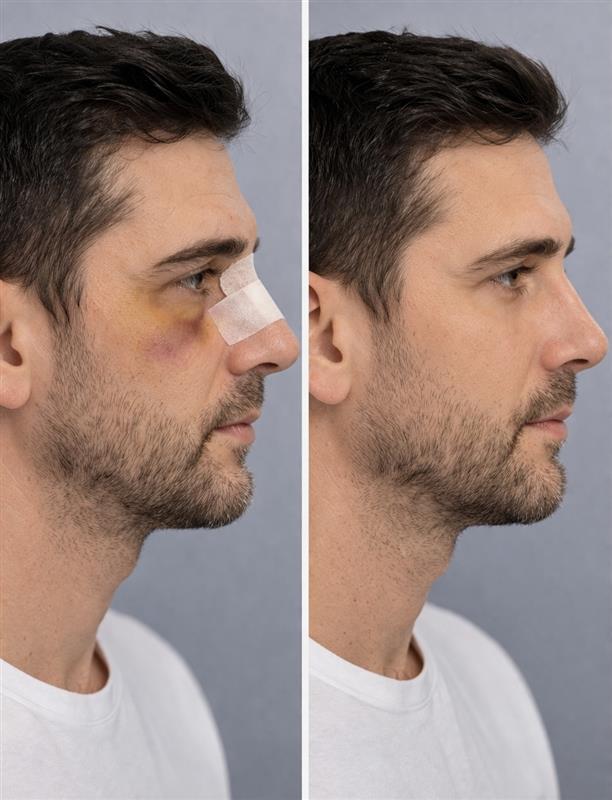
Post-operative edema is not merely a cosmetic inconvenience. Around the eyes, swelling distorts the healing tissue planes and can contribute to asymmetric lid positioning as the tissues settle. The hydrodynamic effects of Hyperbaric Oxygen actively clear fluid from post-surgical tissue, accelerating the resolution of both swelling and ecchymosis.
For patients who have professional obligations, upcoming events, or simply a desire to return to normal life, the compression of the visible recovery period is significant. Early, accurate assessment of the surgical result also allows your surgeon to identify and address any early asymmetry before the tissues have fully set.
Supporting Proper Lid Closure and Tear Film Recovery
Dry eye and lagophthalmos are among the most clinically meaningful complications of blepharoplasty. Both involve disruption to the delicate balance of lid mechanics, tear production, and ocular surface protection. HBOT’s ability to accelerate tissue healing, reduce inflammatory disruption, and support nerve recovery directly addresses the biological mechanisms underlying both conditions. Patients who have pre-existing dry eye are particularly well-served by an Hyperbaric Oxygen therapy protocol that begins before surgery.
Controlling Scarring and Collagen Formation
Irregular collagen deposition around the eyelids can produce stiffness, contour changes, or visible scar lines that compromise both the functional and aesthetic result. Hyperbaric Oxygen modulates fibroblast activity, promoting organized collagen formation. It produces a marked downregulation of pro-inflammatory cytokines while simultaneously promoting the release of anti-inflammatory cytokines — creating a healing environment that is both faster and more predictable.
Antibacterial Protection
Infection following periorbital surgery carries consequences that are more serious than in most other locations. Given the proximity of the eyelids to the orbit, even a localized infection warrants aggressive management. HBOT has well-documented antibacterial properties effective against both aerobic and anaerobic organisms, and has been shown to assist recovery even in the setting of relative antibiotic resistance. For patients undergoing blepharoplasty, this represents a meaningful adjunctive layer of protection.
Accelerating Nerve Recovery and Restoring Sensation
Numbness, altered sensation, or changes in lid proprioception following eyelid surgery are related to trauma to fine nerve endings and disruption of the microvasculature that supplies them. Hyperbaric Oxygen promotes angiogenesis — the formation of new, healthy blood vessel networks — which accelerates nerve healing and restores the microcirculation that sensory recovery depends on. For patients experiencing persistent numbness or altered sensitivity, HBOT offers a meaningful therapeutic pathway.
The Anti-Aging Benefit Most Patients Don’t Expect
Many blepharoplasty patients come to improve their appearance. Hyperbaric Oxygen supports this goal at the cellular level in ways that extend well beyond the surgical site. Through its effects on collagen synthesis and fibroblast function, improves skin quality and texture throughout the periorbital and facial region. Its effects on telomerase — the enzyme responsible for maintaining telomere length, a key marker of cellular aging — provide a measurable anti-aging benefit that complements the cosmetic goals of any facial procedure.
Patients who complete a post-operative Hyperbaric Oxygen protocol at Noah Clinics frequently report improvements in skin vitality and overall facial appearance that they did not anticipate. This is consistent with the broader evidence base for HBOT’s role in longevity and cellular optimization.
Additional Benefits of Hyperbaric Therapy
Beyond its direct impact on blepharoplasty recovery, HBOT delivers systemic benefits that support overall health and healing:
- Increases mitochondrial density, giving the body’s cells more energy to heal
- Promotes stem cell mobilization, increasing the number of circulating regenerative cells
- Decreases inflammatory cytokines while increasing anti-inflammatory cytokines — reducing systemic inflammation during the recovery period
- Promotes neuroplasticity and supports peripheral nerve recovery
- Provides measurable anti-aging effects through telomere support and improved collagen synthesis — benefits that extend well beyond the surgical recovery window
Pre-Operative HBOT: Starting Before Surgery
Hyperbaric Oxygen Therapy is not only a post-operative tool. A short course of pre-operative sessions — typically five to ten treatments — improves the resilience, vascularity, and baseline condition of the tissue your surgeon will be working with. Better-prepared periorbital tissue generally leads to a more favorable surgical outcome and a more controlled healing response. We recommend discussing pre-operative HBOT with both our team and your surgeon well in advance of your procedure date.
For Referring Physicians
If you are an oculoplastic surgeon, ophthalmic plastic surgeon, or facial plastic surgeon considering HBOT as part of your post-operative protocol, Noah Clinics welcomes a collegial conversation. We are a beautiful, on-site physician-led, medical-grade HBOT facility. Our protocols are developed in collaboration with other experienced hyperbaric medicine physicians, and we work with referring surgeons as clinical partners.
We understand that your patients’ results are a reflection of your work. Our role is to support the healing process so that the quality of your surgical outcome is not undermined by individual healing variability — particularly in procedures as anatomically precise as blepharoplasty. Both physician and patient tours of Noah Clinic are welcomed as are our complimentary consultations.
The Science Is Clear
The clinical benefits of HBOT for surgical recovery — reduced edema, improved angiogenesis, modulated immune response, accelerated nerve healing, and enhanced collagen formation — are supported by a growing body of peer-reviewed evidence. Despite this, many patients undergoing blepharoplasty are never informed that this option exists.
Medical-grade Hyperbaric Oxygen Therapy can play a meaningful role in optimizing eyelid surgery recovery—helping support healing, reduce swelling, and enhance overall results when clinically appropriate.
If you are preparing for or recovering from eyelid surgery, we invite you to speak with our team
References
- Assessing the Efficacy of Hyperbaric Oxygen Therapy on Facelift Outcomes: A Case-Control Study Comparing Outcomes in Patients With and Without Hyperbaric Oxygen Therapy
Authors: Omar Fouda Neel, Ahmed Hafez Mousa, Reem Abdulmonem Al-Terkawi, Moamen M. Bakr, and Hatan Mortada. - Role of Hyperbaric Oxygen Therapy in Cosmetic and Reconstructive Surgery in Ischemic Soft Tissue Wounds: A Case Series
Authors: Mark S. Shrime, David B. Larson, and colleagues.
Written By: Noah Clinics Medical Team
Call 212-981-5557 to schedule a consultation or a private tour of Noah Clinics. Our on-site physician provides complimentary consultations and works closely with your surgeon to ensure your care is fully aligned for the best possible outcome.